





Producing game community positioning content with one working brief: p…
A small campaign can become messy before a single asset is published. An indie game developer preparing an early-access community may have a useful topic and a deadline, yet the source notes, audience question, and approval standard live in different notes. Here, the real problem is to set expectations through a name that works before and after launch while keeping game world, studio voice, release stage, feedback purpose, and spoiler policy visible. The first draft is not the starting point. We will approach the assignment through platform-native editing, where the operational goal is to preserve one idea while changing pace, crop, and interaction. Each output will come from the same brief, but each platform will receive its own edit.
Start with the task behind the search. Someone using Discord server name generator is probably facing a blank field, a crowded member list, or a confusing community structure and wants a workable direction quickly. Set this campaign objective: set expectations through a name that works before and after launch. It keeps the piece focused on a decision. Record the exact query once in the background note, then use natural terms such as handle, community identity, room label, or navigation plan. State whether candidates are illustrative and never suggest that availability has been confirmed.
A useful brief answers the questions that otherwise return during revision. Who is the audience, what naming or navigation decision must change, and which platform facts require a source? Put game world, studio voice, release stage, feedback purpose, and spoiler policy in an editable evidence sheet for an indie game developer preparing an early-access community. Add a do-not-say list. Include one approved tone sample, one rejected sample, required aspect ratios, video duration, caption limits, delivery date, and named approvers. Keep examples separate from observed data and label them hypothetical throughout the asset set.
Treat native platform edits as separate deliverables. Give each channel its own hook length, crop, caption depth, safe area, and interaction pattern while retaining the approved lesson. The message stays stable while the reading path changes. Return to the brief for every version.
Treat copy generation as controlled expansion and compression. Begin with a 200-word core explanation based on the approved brief. Ask for three openings aimed at different audience moments, then compress the selected version into a caption and voiceover. Do not ask the system to invent availability or policy facts. A hypothetical cozy exploration project using a location-based community identity provides a concrete teaching device, not user data. Keep the same candidate or layout through every derivative so the campaign tells one coherent story.
Convert the selected message into a visual job before writing an image prompt. Decide whether the asset must compare names, https://discordnamegenerator.com sequence a member path, demonstrate a layout, or summarize checks. Use a hypothetical cozy exploration project using a location-based community identity as the shared illustrative scene. Specify composition, focal point, background, lighting, palette, aspect ratio, and empty space for verified text. Add names and labels manually. Review fingers, faces, objects, interface shapes, repeated icons, text fragments, numbers, and accidental brand marks at full size.
Storyboard before generating motion. Limit the script to one practical question and arrange five beats: recognizable problem, needed inputs, one illustrative option, a human check, and the resulting decision. A hypothetical cozy exploration project using a location-based community identity supplies the demonstration. Put voiceover, on-screen words, seconds, and visual direction on separate rows. Reserve time for the limitation. Generate visual fragments, edit them into sequence, and inspect continuity, hands, objects, characters, accidental text, subtitles, safe zones, audio levels, and the final frame at normal speed and without sound.
Adapt from the approved core message, not another platform's finished post. On a professional feed, lead with the decision and show reasoning in a compact document. On an image-led feed, make the first frame legible on a phone and put context in the caption. For vertical video, reveal the difficulty in the first two seconds and keep subtitles inside safe areas. A longer video can preserve the full comparison and source note. Preserve the evidence while adjusting pace. Test 1:1, 4:5, 9:16, and 16:9 crops as required rather than assuming one master fits all.
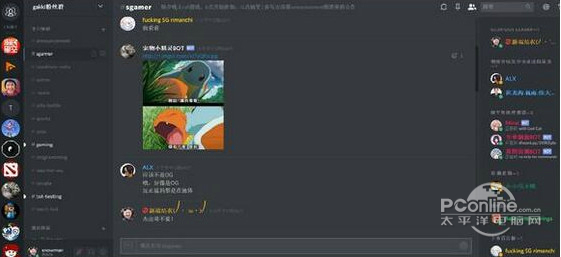
Use a checklist that separates correctness from polish. The first pass verifies sources, dates, facts, calculations, counts, units, platform rules, and the hypothetical label. The editorial pass checks brand voice, repetitive hooks, vague claims, and accidental promotion. The visual pass checks dimensions, crop, safe zones, image words and numbers, hands, faces, objects, symbols, and contrast. Ask another person to state the takeaway. The motion pass checks continuity, captions, pacing, audio levels, and whether subtitles remain readable behind interface controls.
The limits are predictable enough to include in production. Text can contain stale rules, fabricated facts, repeated structures, bland naming lists, and a tone that is more excited than the brief allows. Images and video may distort letters, numbers, anatomy, interface geometry, and continuity. A generated candidate may also resemble an existing creator, group, or protected name. Confidence is not provenance. Verify facts and potential conflicts manually, retain editable overlays, and let a named reviewer approve the final export.
One brief can support many assets only when it remains the campaign's source of truth. For an indie game developer preparing an early-access community, the sequence is audience decision, evidence check, message route, copy, visual plan, storyboard, platform edit, and human approval. A smaller reviewed set beats a larger uncertain one. Keep game world, studio voice, release stage, feedback purpose, and spoiler policy visible, use a hypothetical cozy exploration project using a location-based community identity as an illustration rather than proof, and revise the brief whenever a correction affects more than one asset. The last step is a documented review of the actual files scheduled for publication.
댓글목록
등록된 댓글이 없습니다.